
Early Childhood Education · Childcare Industry
What “Certified” Really Means in Childcare
When a caregiver says they are certified, it is natural for parents to feel reassured. Certification can be an important sign of preparation and commitment. But in childcare, the more useful...
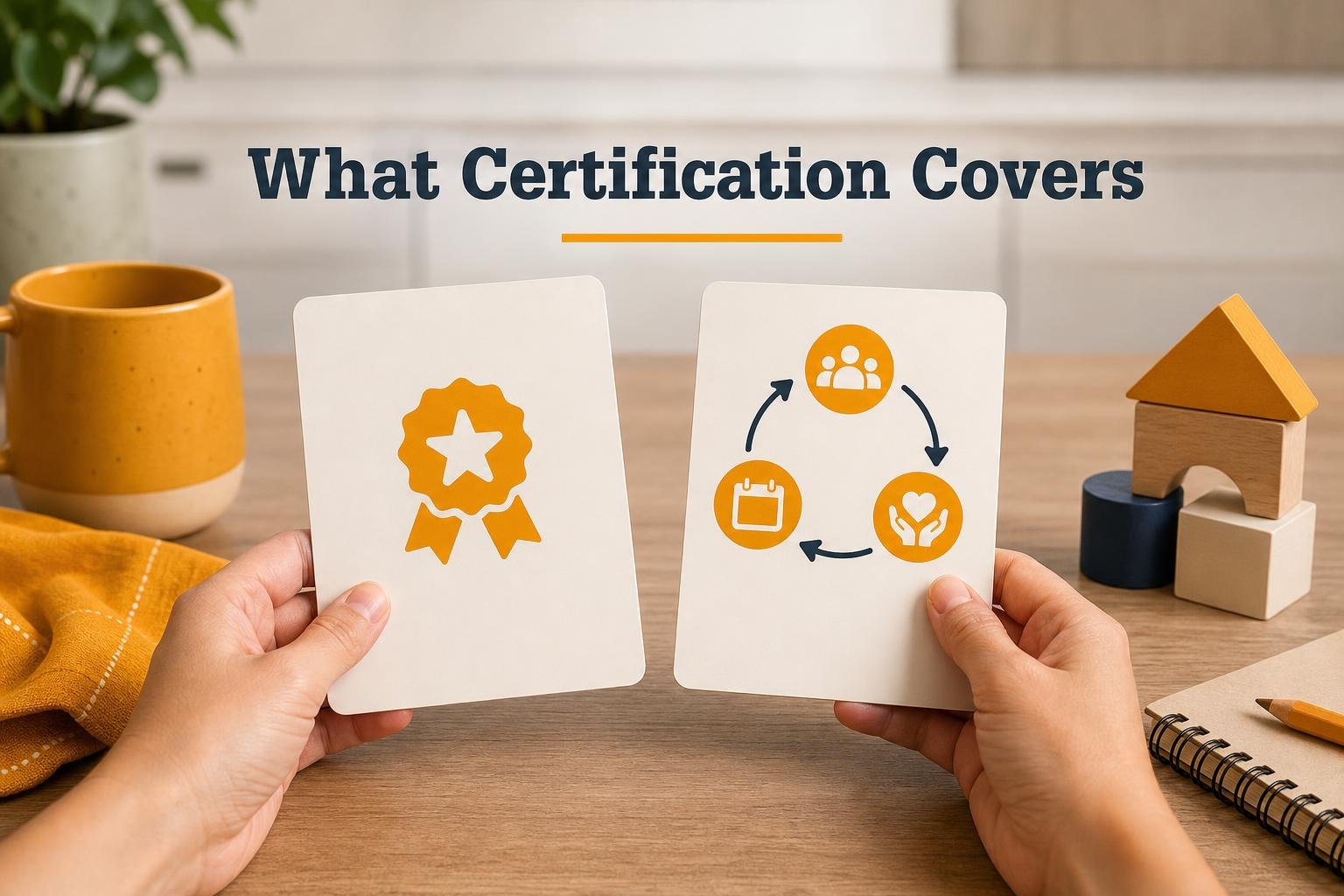
When a caregiver says they are certified, it is natural for parents to feel reassured. Certification can be an important sign of preparation and commitment. But in childcare, the more useful question is not whether a caregiver has a badge. It is what that certification actually covers.
At MatchSitters, we know families are not looking for paperwork alone. They are looking for care that fits their child’s age, routine, and needs. That is why we encourage parents to ask a simple follow-up question: What age group and care situation does this certification apply to?
Not all certifications answer the same question
A first-aid class, infant CPR training, and a childcare credential may all sound reassuring, but they do not mean the same thing. Each one points to a different kind of preparation. A caregiver can be trained in one area and still need additional experience or education in another.
For example, infant CPR training may be especially relevant for babies. It can show readiness for an emergency involving an infant, but it does not tell a parent much about school-age routines, homework time, or bedtime transitions. A childcare credential may speak more to child development and daily care, while a background check answers a different question altogether.
This is why certification should be understood in context. A family with a newborn may prioritize different training than a family with an after-school routine. Both are valid. Both matter. The key is matching the right preparation to the right care situation.
Why context matters for busy parents
Parents are often asked to make childcare decisions quickly, especially when life is full and schedules are changing. In those moments, it can be tempting to rely on a single word like “certified” as a shortcut. But the safest and most supportive choice usually comes from a little more clarity.
Asking what a certification covers helps parents understand whether a caregiver’s training aligns with their child’s stage of development. It also helps families avoid assuming that one type of training covers every situation. A caregiver may be excellent, but the fit still matters.
For us, that is part of respectful, reliable childcare: not just checking boxes, but making sure the care offered is appropriate for the child in front of us. That perspective supports both safety and peace of mind.
A simple question can bring real clarity
There is no need to collect more paperwork than necessary. The goal is not to build a stack of documents. The goal is to understand what the training means for your child’s daily care.
A helpful habit is to ask: Does this certification apply to infants, toddlers, school-age children, or a specific care setting? That one question can open a better conversation and help parents feel more confident in their choice.
If you are comparing caregivers or trying to understand what different credentials mean, this kind of clarity can make the process feel less overwhelming. It is a small question, but it can lead to a much better match for your family.
For families looking for thoughtful, dependable support, we believe trust starts with clear information and a genuine understanding of children’s needs. Learn more at MatchSitters.
When it comes to childcare, the best certification is the one that matches the care situation you actually need. That is why we recommend asking what the training covers before assuming it covers everything.
If you are exploring care options, you can also visit our website to learn more about how we support families with reliable childcare connections.